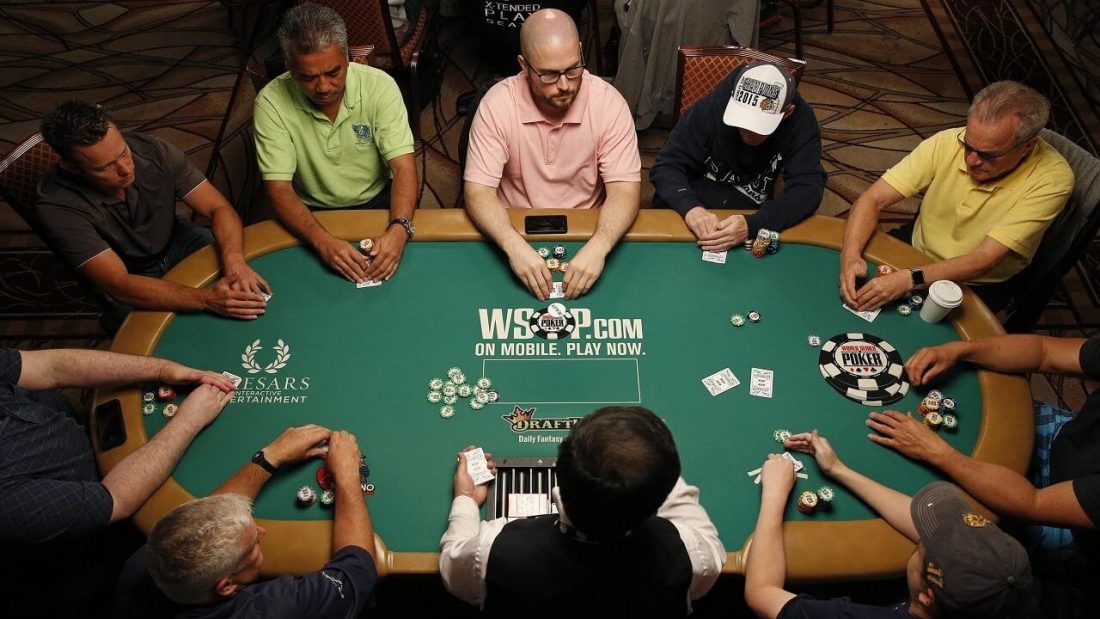

Double Board PLO Bomb Pots: Rules, Typical Mistakes and Starting Hand Selection
Double Board Pot-Limit Omaha Bomb Pots turn an ordinary PLO hand into a large multiway contest before any community cards appear. Every active player contributes a compulsory amount, the usual pre-flop betting round is removed, and two separate boards are dealt from the same deck. Half of the final pot normally goes to the winner of the upper board and half to the winner of the lower board. The format has moved well beyond occasional cash-game experiments: the 2026 World Series of Poker included a $1,500 high-only Double Board PLO Bomb Pot event that attracted 1,673 entries. Its appeal is easy to understand, but the large pots and two simultaneous boards punish careless decisions. Players need to follow standard Omaha hand-construction rules, assess how their four hole cards connect with both boards and avoid investing heavily when they can realistically win only half of the money.
How Double Board PLO Bomb Pots Work
A typical hand begins with every player posting a fixed bomb-pot ante. The amount is set by the organiser or agreed by the cash-game participants and is often several times larger than a normal big blind. Once the compulsory contributions have been collected, each player receives four private cards. There is usually no opportunity to fold, call or raise before the flop. The dealer places two separate three-card flops on the table, creating an upper board and a lower board, and the first betting round begins. Because every seated player reaches the flop, the initial pot is much larger and the number of competing hands is higher than in a standard PLO pot.
Normal Omaha construction rules apply separately to both boards. At the showdown, a player must use exactly two of their four hole cards and exactly three community cards from the relevant board. Using one, three or four hole cards is not allowed. The same pair of hole cards may be used on both boards, although a player may also use a different pair for each one. For example, a suited ace and king might form a flush on the upper board, while two connected lower cards from the same hand form a straight on the lower board. Each five-card holding is assessed independently before the pot is divided.
In the common high-only version, half of the pot is awarded to the highest-ranking hand on each board. A player who wins both halves scoops the entire pot. When two players tie on one board, that half is divided between them, so a player who ties one board and loses the other may receive only one quarter of the full pot. Pot-Limit betting remains in force, which means a bet or raise cannot exceed the permitted pot-sized amount. Procedures concerning odd chips, the first player to act and the treatment of an absent seat can vary, so local rules should always be confirmed before play starts.
From the Initial Deal to the Showdown
Two-board play should not be confused with running a single board twice after players are already all-in. In a Double Board Bomb Pot, both boards exist from the flop and affect every betting decision. After the two flops have been dealt, players act in the order specified by the room, commonly beginning with the first active seat to the left of the dealer button. A turn card is later added to each board, followed by a river card for each. Both boards are dealt from one standard deck, so every visible card also provides information about cards that cannot appear elsewhere in the hand.
The flop decision begins with two separate questions: what does the hand currently hold on each board, and how can it improve? A player might have top set on the upper board and only a backdoor draw on the lower board. Another holding might have a nut-flush draw on one board and a strong wrap around the ranks of the other. The second hand may sometimes be more valuable because it has realistic routes to winning both halves. Present strength matters, but the number and quality of possible turn-and-river improvements are often equally important in a multiway pot.
At the showdown, the dealer identifies the strongest legal five-card hand for each remaining player on the upper board and then repeats the process on the lower board. Half of the pot is allocated to each result. If one player holds the nuts on both boards, the distribution is straightforward. Complications arise when a board is tied among several players or when side pots have been created by unequal all-in amounts. Each side pot must be divided according to the players eligible for it. This is why clearly tabling all four hole cards and waiting for the dealer to confirm the result is sensible live-game practice.
Typical Mistakes in Double Board PLO Bomb Pots
The most common mistake is treating a strong holding on one board as sufficient reason to continue against major action. A nut straight on the upper board may look impressive, but its value falls sharply when the player has no pair, draw or useful blocker on the lower board. Even when the straight remains ahead, the likely return may be only half of the pot. If an opponent can win the lower board and has a redraw against the upper-board straight, that opponent is effectively competing for the whole pot while the one-board player is defending only one half.
Another costly error is overvaluing hands that are strong but not nutted. Bottom set, a low flush and the lower end of a straight can win ordinary pots, yet they become vulnerable when every player has seen the flop. More opponents mean a greater chance that somebody holds a higher flush, a larger set or a wrap with numerous improvements. A king-high flush can be particularly troublesome when the ace of the suit is unaccounted for. Players should distinguish between a hand that is currently ahead and a hand that can withstand several bets against a multiway field.
Many players also assess each board in isolation and forget that both were dealt from the same deck. Suppose the upper board contains two hearts and the lower board contains three more hearts. Five visible hearts have already been removed from circulation, reducing the number of possible flush cards available on later streets. The lower board may also reveal ranks that remove straight outs from the upper board. Counting visible suits and ranks does not require complicated calculation, but it prevents players from relying on draws that are much weaker than they first appear.
Betting, Position and Pot Control
A bomb-pot ante creates a substantial pot before the flop, so stacks may already be relatively short compared with the money in the middle. This does not mean every strong-looking hand should be played for the full stack. A pot-sized flop bet followed by another large turn bet can leave little room to fold on the river. Before making the first major wager, a player should consider which turn cards remain favourable, how many opponents can continue and whether the hand is aiming to scoop or merely hold one board.
Poor use of position is another recurring problem. Leading into several opponents from an early seat reveals information before the player has seen how the rest of the table reacts. A check may allow an aggressive opponent to bet, after which the early-position player can make a better-informed call, raise or fold. In position, it is easier to control the size of the pot with a marginal two-board holding and easier to extract value when opponents show weakness. Position does not remove risk, but it gives the player more information before chips are committed.
Calling simply because half of the pot may be available is rarely a complete justification. A player expecting to win only one board must account for ties, redraws and the possibility of already being beaten. If two players share the same nut straight on the upper board while one opponent wins the lower board, each straight holder receives only one quarter of the total pot. Repeatedly paying large bets to compete for a quarter or an uncertain half is an expensive habit. The price of a call should be judged against the player’s realistic share of the entire pot rather than the visual strength of one five-card hand.

How to Assess Starting Hands
Starting-hand selection has a different meaning in a bomb pot because players generally cannot fold before the flop. The practical task is not deciding whether to enter the hand, but deciding which four-card holdings deserve substantial investment once both flops are visible. Useful starting cards tend to have several forms of cooperation: connected ranks, high cards, suited combinations and cards capable of making the nuts. A hand that can use multiple two-card combinations has more ways to connect with two unrelated boards than a hand built around one isolated pair or one suited combination.
High, connected and double-suited hands are attractive because they can form nut straights, strong wraps and high flushes. A hand such as ace-king-queen-jack with two suits can interact with many broadway and middle-card boards. Ace-ace-jack-ten with two suits combines a premium pair, nut-flush potential and connected side cards. These holdings are not automatic winners: two low, coordinated flops may miss them completely. Their advantage is flexibility, not certainty. They can produce strong combinations on both boards without depending on one very specific set of community cards.
Pairs require more careful treatment. A high pair can make top set, but two paired hole cards leave fewer ranks available for straight construction. Disconnected aces such as ace-ace-seven-two with no useful suits may make an overpair on both boards while having very little chance to improve. Overpairs are rarely enough against several PLO opponents. Lower pairs can become even more difficult because a flopped set may already be behind a higher set. Paired starting hands are most useful when the remaining cards provide connected, suited support rather than acting as unrelated side cards.
Practical Starting-Hand Categories
The most promising category contains four cards that work together and can make nut-quality hands in more than one way. Examples include ace-king-queen-jack double-suited, ace-ace-jack-ten double-suited and ace-queen-jack-ten with two strong suits. These hands can combine high flush potential with broadway straights, wraps, top pairs and sets. Double-suited rundowns such as king-queen-jack-ten also have broad coverage, although the lack of a suited ace means a completed king-high flush may still face a higher flush. The key advantage is the number of useful two-card combinations rather than the appearance of one premium pair.
The middle category includes connected hands with weaker suits, single-suited high-card structures and lower double-suited rundowns. Jack-ten-nine-eight can create powerful straight draws, while nine-eight-seven-six can connect strongly with lower and middle boards. However, these hands are more likely to make a non-nut straight or a vulnerable flush. Their value therefore depends heavily on the exact boards and the number of opponents showing interest. They can support aggressive play when they connect strongly with both boards, but they should not be treated as premium merely because all four ranks are consecutive.
The weakest category contains disconnected, rainbow holdings and hands with several cards that do not support one another. Ace-king-seven-two rainbow, queen-queen-six-two rainbow and king-nine-five-three with one weak suit have few ways to make the nuts on two boards. An ace alone does not make a poor hand strong, and a pair alone does not justify stacking off after one favourable flop. A reliable practical test is to identify the useful two-card combinations, the nut draws, the boards the hand can realistically win and the cards that may improve both halves. When most answers depend on a single board or a single unlikely runout, disciplined pot control is usually preferable to forced aggression.