
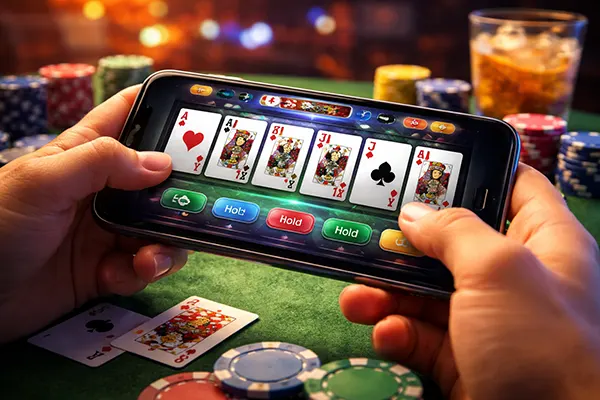
Video Poker on Mobile: How a Small Screen Changes Decision Quality
Mobile gambling has become a routine part of online poker culture, and video poker is among the games most frequently played on smartphones. The mechanics appear simple: choose cards to hold, discard the rest, and aim for the highest-paying combination. However, when the game moves from a desktop monitor to a five-inch screen, the environment in which decisions are made changes significantly. Screen size, interface design, and the speed of play influence how players analyse probabilities and react to information. Understanding these factors is important because video poker is one of the few casino games where decision quality directly affects long-term results.
How Screen Size Changes the Way Players Process Information
Video poker requires constant evaluation of card combinations, expected value, and potential draws. On a desktop display, players usually see the paytable, their current cards, and additional interface elements clearly and simultaneously. A smartphone compresses these visual elements into a much smaller area, forcing players to rely more on quick recognition rather than careful analysis.
When visual space is limited, the brain prioritises the most noticeable information. Cards themselves remain the central focus, while elements such as paytables or strategy hints may become secondary or hidden behind menus. This shift subtly affects how decisions are made, as players may rely more on intuition or habit instead of actively comparing options.
Another aspect is eye movement. Research in human–computer interaction shows that smaller displays lead to shorter scanning patterns. Instead of reviewing the entire interface, users tend to focus on a narrow visual area. In video poker this can reduce the likelihood of double-checking card combinations or verifying optimal holds.
Visual Clarity and Cognitive Load in Mobile Interfaces
Cognitive load refers to the amount of mental effort required to process information. A small screen increases this load because players must interpret condensed visuals and often navigate between interface layers. Even slight increases in cognitive effort can influence decision accuracy in probability-based games.
For example, when the paytable is not fully visible, players may rely on memory rather than checking payouts directly. While experienced players often memorise key values, beginners may misjudge the value of certain hands, especially in variants with unusual paytables or bonus features.
Interface design plays a critical role here. Well-optimised mobile video poker games enlarge card graphics and simplify menus, reducing the mental effort needed to understand the current state of the hand. Poorly designed layouts, on the other hand, increase mistakes by forcing players to interpret cluttered visuals.
Speed of Play and Decision Pressure on Smartphones
Mobile devices encourage faster interaction than traditional desktop environments. Touchscreens allow instant card selection, and the compact layout shortens the physical distance between controls. As a result, hands are often played more quickly on mobile devices than on larger screens.
Faster gameplay can have mixed effects. On the one hand, experienced players who already know optimal strategies may appreciate the quicker pace. On the other hand, rapid interaction reduces the time spent evaluating each hand, which can lead to suboptimal decisions, especially during long sessions.
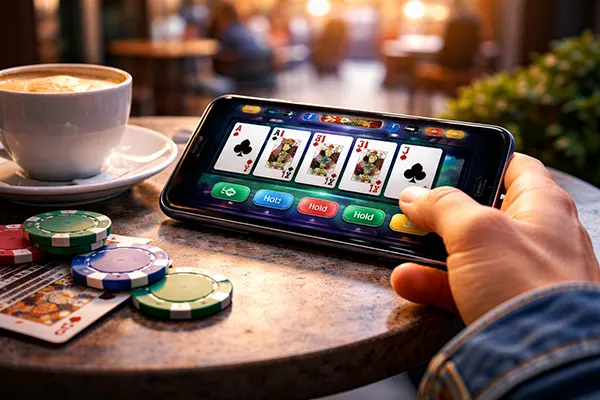
Another factor is the context in which mobile gaming occurs. Smartphones are used in varied environments: public transport, cafés, waiting rooms, or during short breaks at work. These environments often include distractions that would not exist when playing on a dedicated computer setup.
Short Sessions and Their Influence on Strategic Thinking
Mobile gambling sessions tend to be shorter and more fragmented. Players frequently open a game for a few minutes rather than committing to long sessions. While this behaviour suits casual play, it can disrupt strategic concentration.
Video poker strategy benefits from consistency. Optimal decisions rely on recognising patterns, remembering paytable structures, and applying probability-based rules repeatedly. Frequent interruptions break this mental rhythm and may increase reliance on instinct rather than structured decision-making.
At the same time, shorter sessions may reduce fatigue. Long desktop sessions can cause decision quality to decline over time, while mobile sessions naturally limit their duration. For some players this balance can partially offset the disadvantages of a smaller screen.
Touch Interaction and Decision Accuracy
Touchscreen controls introduce a different interaction style compared with mouse input. Selecting cards with a finger is intuitive, but it also increases the risk of accidental actions. Even a slight mis-tap may hold or discard the wrong card.
Most modern video poker applications include confirmation indicators such as highlighted cards or vibration feedback to reduce such mistakes. These features help players verify their selections before the draw takes place.
Despite these improvements, physical accuracy still matters. The smaller the device, the greater the chance of selecting the wrong card unintentionally, particularly for players using large fingers or playing quickly.
Interface Optimisation and Modern Mobile Game Design
Developers increasingly optimise mobile video poker interfaces to address these issues. Cards are displayed with larger spacing, touch zones are expanded, and critical information such as the current bet and paytable is placed in fixed positions.
Another improvement is adaptive layout design. Modern games automatically adjust card size and button placement depending on the device’s screen dimensions. This ensures that essential elements remain readable even on compact displays.
Ultimately, the quality of decisions in mobile video poker depends not only on the player but also on the software design. Well-engineered interfaces minimise cognitive strain and accidental input, allowing players to focus on strategy rather than navigation.