
Open-Face Chinese Poker Online: Rules, Scoring and Risk Management Basics
Open-Face Chinese Poker (OFC) has grown into one of the most strategically rich poker variants available online. Unlike traditional formats, it removes betting rounds and replaces them with progressive decision-making, where each card placement affects the final outcome. Understanding the rules, scoring mechanics, and risk control principles is essential for consistent results in 2026, especially as online platforms now feature faster gameplay, tighter competition, and more experienced opponents.
Core Rules of Open-Face Chinese Poker Online
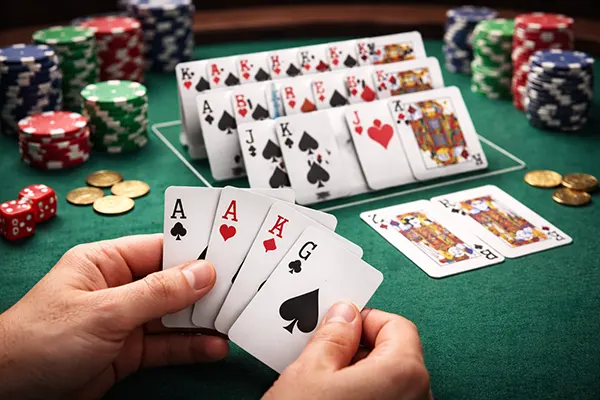
In OFC, each player builds three poker hands simultaneously: a front hand with three cards, a middle hand with five cards, and a back hand with five cards. The goal is to arrange these hands so that the back is the strongest, the middle is weaker, and the front is the weakest. If this order is violated, the hand is considered “fouled” and scores zero, regardless of card strength.
The game begins with five cards dealt face up. Players place them across the three rows, then receive additional cards one at a time over subsequent rounds. Each new card must be placed immediately, with no option to rearrange previous decisions. This creates a dynamic where early choices strongly influence the final structure.
Online versions in 2026 often include time limits, auto-placement features, and analytics tools. While these additions improve accessibility, they also increase pressure, making it essential to understand fundamental placement logic before relying on automation.
Hand Structure and Placement Strategy
The back hand typically aims for strong combinations such as flushes, full houses, or straights. Since it carries the highest weight, misplacing strong cards here can weaken the entire layout. Experienced players prioritise building a stable back row early.
The middle hand acts as a balance between strength and flexibility. It must remain weaker than the back but still competitive enough to win points. Overcommitting to the middle can lead to fouls if the back cannot catch up in strength.
The front hand, limited to three cards, focuses on pairs or high cards. While it may seem less important, it often determines bonus points and can swing the final score. Smart players avoid sacrificing the front entirely, even when chasing strong back combinations.
Scoring System and Points Calculation
Scoring in OFC is based on comparing each of the three hands against an opponent. Players earn one point for each row they win. If all three rows are won, a “scoop” occurs, typically awarding a bonus of three additional points.
Royalties add another layer of scoring complexity. These are bonus points awarded for strong combinations, such as a straight in the middle or a pair of queens or higher in the front. The exact royalty table may vary slightly between online rooms, but the principle remains consistent.
Modern online formats often include progressive scoring displays, allowing players to see potential points in real time. This feature helps decision-making but can also tempt players into risky setups in pursuit of high royalties.
Understanding Royalties and Fouls
Royalties reward aggressive yet structured play. For example, placing a full house in the middle hand yields higher points than a simple win. However, chasing these bonuses without securing hand hierarchy increases the risk of fouling.
A fouled hand results in a complete loss for the round, regardless of partial strengths. This is one of the most punishing aspects of OFC, and it separates disciplined players from reckless ones. Even a strong back hand becomes irrelevant if the overall structure breaks the ranking rule.
Advanced players in 2026 rely on probability awareness rather than intuition. They calculate the likelihood of completing draws before committing to royalty-heavy strategies, reducing unnecessary losses over time.

Risk Management Principles in OFC Poker
Risk management in Open-Face Chinese Poker revolves around balancing ambition and stability. Since there are no betting rounds, the primary risk comes from hand construction errors rather than chip commitment. Each placement decision should consider both current strength and future flexibility.
One of the most effective approaches is conservative structuring in early rounds. Securing a valid hand should always take priority over chasing maximum points. Players who consistently avoid fouls tend to outperform those who rely on high-variance strategies.
Online environments in 2026 also introduce multi-table play and faster pacing, increasing cognitive load. Managing session length, avoiding fatigue, and maintaining focus are now part of practical risk control, not just theoretical advice.
Practical Decision-Making and Bankroll Discipline
Short-term variance in OFC can be significant due to the nature of card distribution. Even optimal decisions may lead to losses in the short run. For this reason, players should track long-term performance rather than react emotionally to individual hands.
Bankroll discipline remains relevant even without traditional betting rounds. Choosing appropriate stake levels and avoiding rapid progression after wins helps maintain consistency. Many experienced players use fixed session limits to control exposure.
Decision-making should always factor in incomplete information. Since cards are revealed gradually, adaptability is more valuable than rigid strategy. The ability to adjust placements based on new cards is a defining skill in high-level OFC play.